Simple Camera Habits for Better Everyday Photographs
Photography becomes easier to enjoy when every outing does not need to produce a masterpiece. Everyday subjects are enough: a quiet street, morning light on a table, a market stall, reflections after rain, or the geometry of a familiar building. The challenge is not finding spectacular scenes. It is learning to notice ordinary scenes before they disappear.
Whether you use a dedicated camera or a phone, a few habits can improve consistency without turning every photograph into a technical exercise. They are simple enough to repeat and flexible enough to work in many settings.
Look at the light before the subject
Before raising the camera, ask where the light is coming from and what it is doing. Side light reveals texture. Backlight can separate leaves, hair, steam, or translucent objects from the background. Flat light can be useful for colour and detail. There is no single correct type; the useful habit is noticing it first.
Moving only a few steps can transform the same scene. Try standing closer to a window, turning ninety degrees, or waiting for a cloud to soften the sun. These small adjustments usually matter more than changing equipment.
Remove one thing from the frame
Many everyday photographs improve when the composition becomes simpler. Check the edges of the frame for bright signs, bins, cables, cropped objects, or other details that compete with the subject. Often you can remove one distraction by shifting the camera slightly left or right, crouching lower, or moving closer.
This does not mean every image should be minimal. Busy scenes can be excellent photographs. The difference is whether the complexity feels intentional. If several elements are important, look for a visual relationship between them rather than allowing the frame to become accidental.
Take one picture, then wait
After the first exposure, resist the impulse to walk away immediately. Stay in place for a few seconds. A person may enter the right part of the street, a shadow may move, or you may suddenly notice a cleaner angle. The second or third frame is often stronger because the first one helped you understand the scene.
Waiting also changes how you photograph people in public spaces. Instead of chasing a subject, you can choose a composition first and allow the right moment to happen inside it. The result tends to feel calmer and more deliberate.
Use one focal length for a while
If your camera has a zoom lens, choose one focal length for a short walk and leave it there. If you use a phone, pick one camera rather than switching constantly between wide and telephoto views. A temporary limitation teaches you how distance changes perspective because you have to move your feet instead of solving every composition with a zoom ring.
This is especially helpful when learning a new camera. You begin to predict what will fit in the frame before looking through the viewfinder, which makes shooting quicker and more intuitive.
Review for patterns, not only favourites
When you look through the photographs later, do more than choose the sharpest or prettiest image. Notice recurring mistakes and recurring strengths. Perhaps you consistently leave too much empty space above subjects, or perhaps you are drawn to reflections, doorways, warm interior light, or layered street scenes.
These patterns are useful because they reveal both what to improve and what kind of photographs you naturally enjoy making. A personal style often develops from repeated attention long before it becomes a deliberate aesthetic.
Keep the camera easy to reach
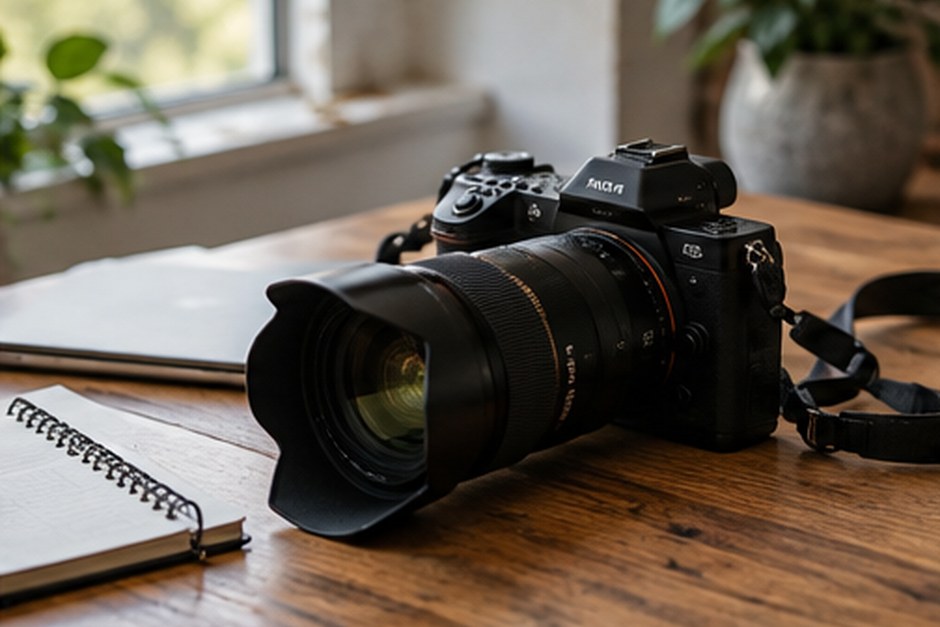
The final habit is practical: reduce the effort required to start. Keep the battery charged, a memory card in the camera, and a simple carry setup ready. If using a phone, clear enough storage that you are not managing files when the light is changing.
Good everyday photography is less about being prepared for rare events than being available for ordinary ones. When the camera is ready and your attention is active, familiar places begin to offer more possibilities than they did before.