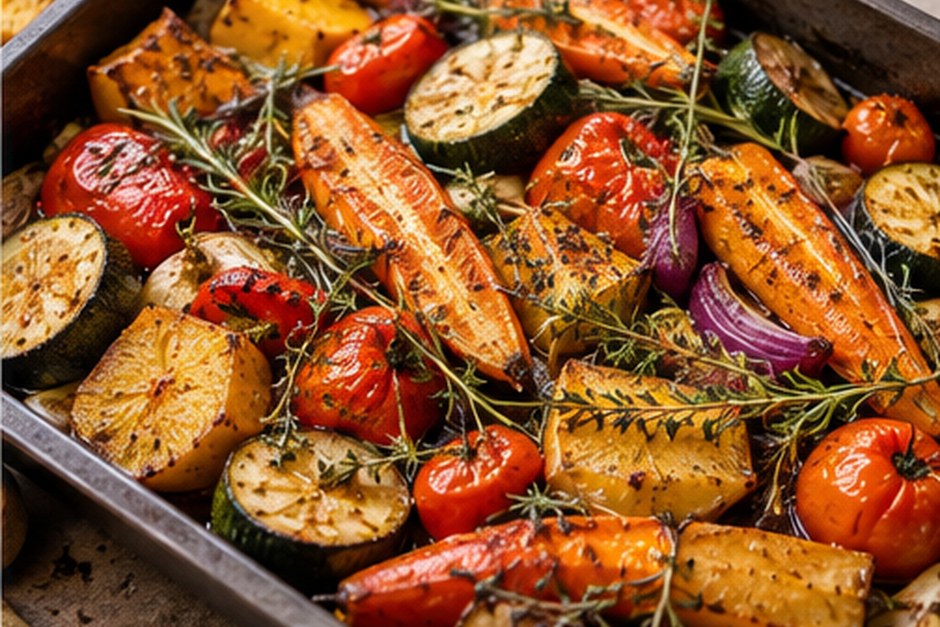
Roasted Vegetables for a Flexible Weeknight Dinner
Roasted vegetables are useful because the method adapts to what is already in the kitchen. Carrots, onions, peppers, courgettes, potatoes, cauliflower, squash, and tomatoes all behave a little differently in the oven, but they can share the same tray when the pieces are cut with their cooking times in mind. The result can become a side dish, the centre of a grain bowl, a topping for toast, or the base of tomorrow’s lunch.
Instead of treating this as a strict recipe, think of it as a repeatable formula. Choose a few vegetables with contrasting textures and colours, add enough oil to coat them lightly, season generously, and give them space to brown.
A simple combination to start with
For one large tray, try carrots, red onion, courgette, small potatoes, and cherry tomatoes. Cut the potatoes and carrots into smaller pieces because they take longer to soften. Courgette and onion can be slightly larger. Leave cherry tomatoes whole or halve them if they are large.
Toss the firmer vegetables first with olive oil, salt, black pepper, and dried herbs. Rosemary, thyme, oregano, or a simple mixed herb blend all work. Add softer vegetables later if you prefer them to keep more shape, or roast everything together for a more caramelised, rustic tray.
Heat and spacing do most of the work
A hot oven helps vegetables brown rather than steam. Around 220°C conventional, or 200°C fan, is a useful starting point for a mixed tray. Spread the pieces in a single layer with visible gaps between them. If the tray is crowded, divide the vegetables between two pans instead of stacking them.
Turn the vegetables once during roasting so more surfaces meet the hot pan. Depending on size and type, a mixed tray usually takes roughly 30 to 45 minutes. The best indicator is texture: potatoes and carrots should be tender when pierced, while edges should show some colour.
Build flavour after roasting too
Seasoning does not have to end before the tray goes into the oven. A squeeze of lemon, a spoonful of yogurt, crumbled cheese, toasted seeds, chopped parsley, or a drizzle of herb oil can change the character of the same vegetables completely. Adding fresh elements after roasting also creates contrast with the deeper, sweeter flavours developed in the oven.
For a warmer, earthier version, use smoked paprika and cumin before roasting. For something brighter, keep the seasoning simple and finish with lemon zest and fresh herbs. If serving with grains, a sharp dressing helps connect everything on the plate.
Turn one tray into several meals
Serve the vegetables straight from the oven with bread, rice, couscous, or a simple protein. The next day, leftovers can be folded into an omelette, added to pasta, spooned over hummus, or reheated and placed in a wrap. Chopped roasted vegetables also make an easy topping for a quick soup or warm salad.
Allow leftovers to cool before refrigerating them in a covered container. Reheat only the portion you plan to eat so the rest keeps its texture. A hot frying pan or oven usually restores browned edges better than a long spell in the microwave.
Keep the method flexible
The most useful part of this dinner is that exact ingredients are optional. If you have only three vegetables, use three. If one cooks faster, cut it larger or add it later. If the tray looks pale near the end, give it a few more minutes rather than relying only on the timer.
Once the basic rhythm becomes familiar—cut, season, spread, roast, finish—you can adapt the tray to the season and whatever needs using up. That makes roasted vegetables less of a recipe to remember and more of a dependable way to assemble dinner.